

Browse our full lineup of Pond Free Waterfall Kits — or let the quiz narrow it down for you.
Your basin should be sized in relation to the amount of water in transit. To keep the pump from running dry and to compensate for the water lost due to evaporation, the basin will need to hold 1.5 times the water you have in transit. Using the formulas provided will ensure that your Basin Total ft.³ either equals or exceeds Minimum Required Basin Total ft.³
* We recommend using 2.5 times the WIT in the formulas above and to use Pond Free Blocks to account for all variables.
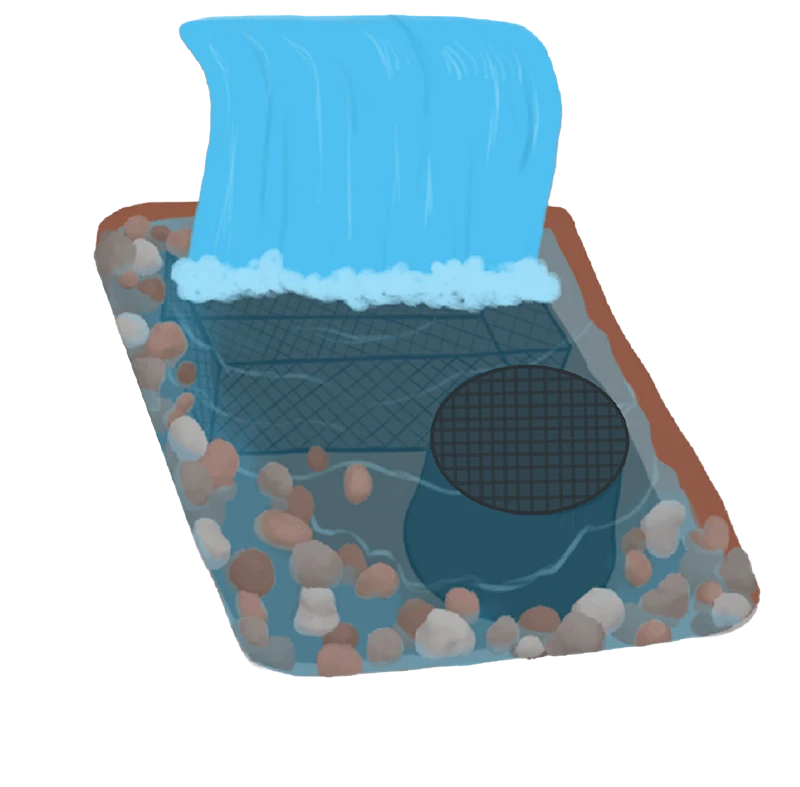
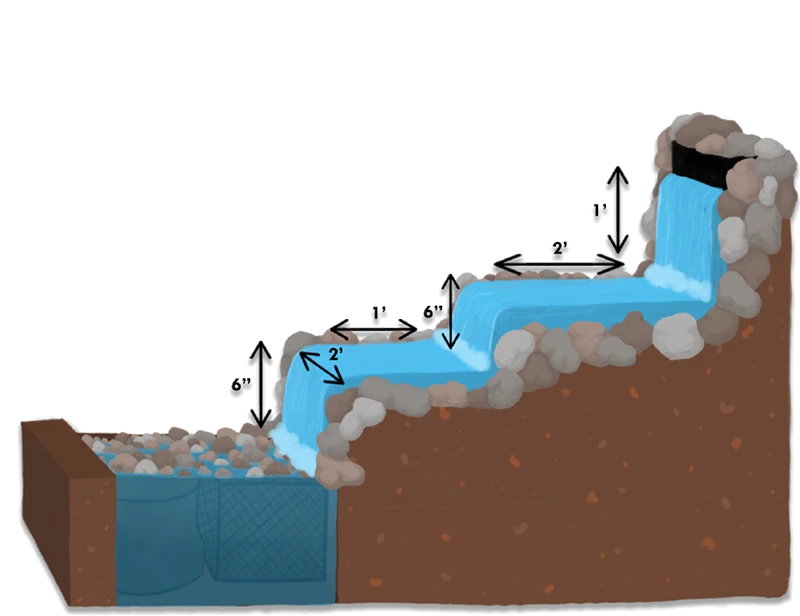
Water in transit is the total volume of water that is moving in your system. This is used for figuring the size the basin needs to be. Use the equation below to calculate the amount of water in your feature.
L represents the length of the waterfall and streamway
W is the width of the waterfall and streamway
0.25 is the depth of the streamway in ft.
7.48 is the number of gallons that 1 cubic foot can hold
* This average does not account for pooling areas. Pooling areas do not flow through the system the same as WIT. The volume of pooling areas should be measured separately and factored into basin volume as a "one-time fill".
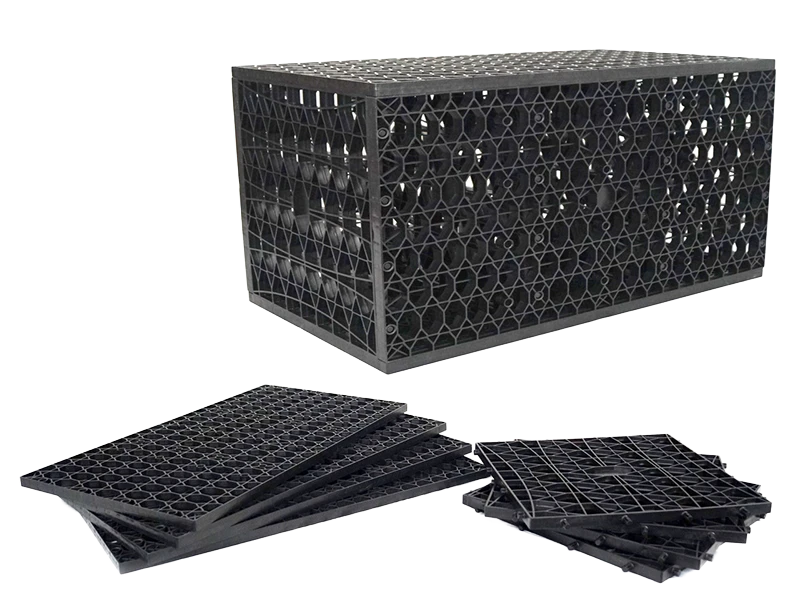
Pond Free Blocks will be used to build the basin area and will be included in the majority in our kits. Each block will hold 31.5 gallons. When calculating basin size, take 2.5 times your water in transit and dividing it by 31.5 will tell you how many blocks to use in your basin. While other options are available to use when building the water containment, we recommend using the Pond Free Blocks.
Pond Free Blocks work well in a variety of features. They are excellent when used in a bog filter and, most commonly, when building a basin for a Pond Free system. With 96% void space, the blocks can hold more water in a smaller space while still being able to support pavers, gravel, and other landscaping. Quickly lock the Pond Free Blocks panels in place and they are ready for installation. Pond Free Blocks save space and money by decreasing the volume of rocks needed and ensuring plenty of water to keep the pump from overheating.
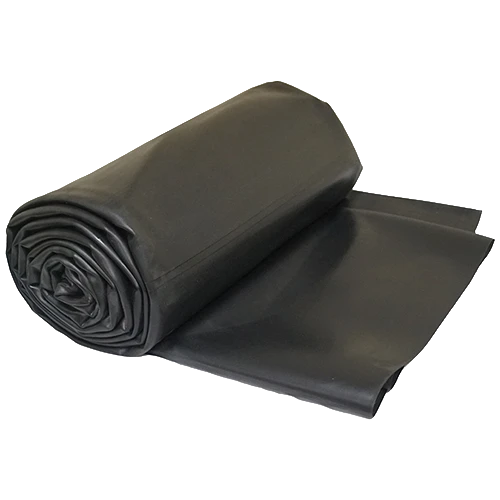
Adapts readily to a variety of applications
Remains flexible in extreme temperatures
Contains no plasticizers that can crack and split
Readily accepts pipe and hose penetrations
Certified fish and wildlife safe
25 year warranty
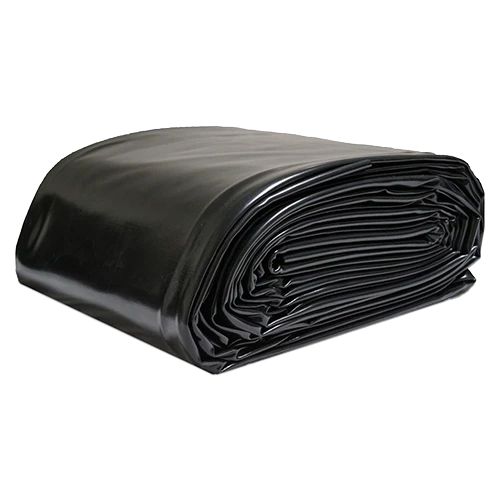
Protect PVC liner from direct UV exposure
Adapts readily to pond and pondless waterfalls
Attaches easily to waterfalls, weirs and skimmers
Certified fish and wildlife safe
Budget-friendly option
5-year warranty
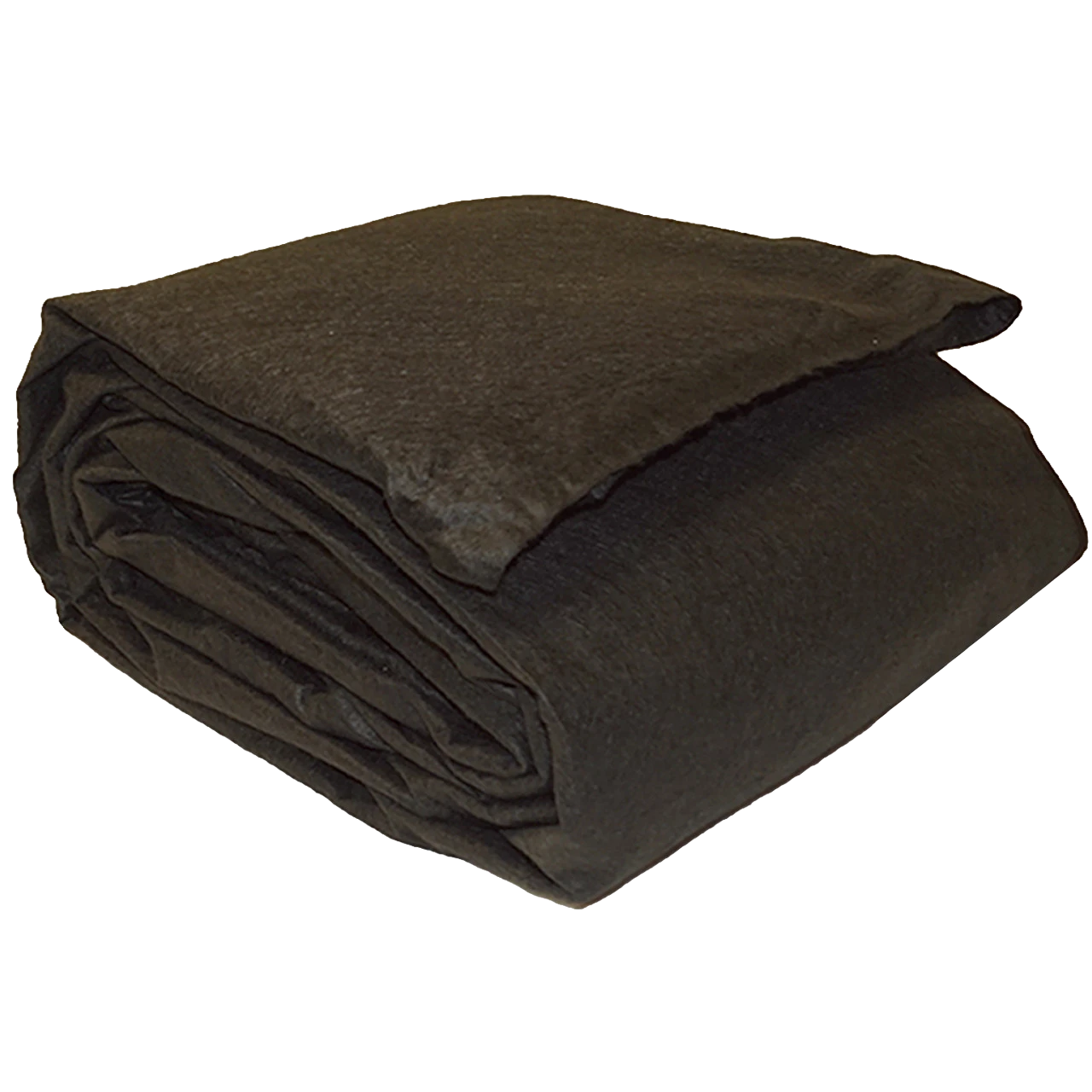
The biggest contributors to pond liners failing are poor, unstable soil conditions and rips and tears from rocks and boulders. Shifting soil creates pockets and voids under your pond liner, forcing it to stretch under the weight of the water. Rocks and boulders placed on and around your water feature create aesthetically pleasing visual focal points. They can also penetrate, tear and harm your liner. Underlayment adds an extra layer of protection between pond liner and rocky or unstable soils. It stabilizes soil to prevent air voids from forming between the liner and earth; reduces wear and abrasion from rocks and roots and extends the life of pond liner.
Browse our full lineup of Pond Free Waterfall Kits — or let the quiz narrow it down for you.
Use the tabs and Pond-Free Finder for all the assistance you'll need to find the right kit for your project.